Long-Term Trends and Environmental Variables
More information can be found on our PAM-Trends site.
Team Leads
Genevieve Davis (NEFSC), Julia Zeh (NEFSC)
Goal
Integration of PAM and environmental data to support investigations of biological trends by developing new tools that can be applied to all regions and species of interest.
Summary
We will create a streamlined workflow to integrate PAM data with necessary ancillary datasets to address questions relevant to long-term species trends. This workflow will include: identifying PAM data to be included; identifying the environmental data to be included; creating tools for accessing, formatting, and integrating a subset of these data streams; and using these tools and approaches broadly across all regions and species of interest.
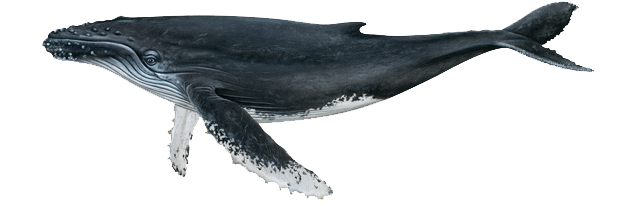
The primary goal of this project is to compare humpback whale occurrence trends nationwide. All regions will submit and format their humpback detection data into the Passive Acoustic Cetacean Map database.
This workflow will allow for a national comparison of one species to be able to identify and compare changes (or lack thereof) within and across regions. Once this structure has been established, these standardized data formats, tools, and environmental data streams can be applied across the range of project goals and regional needs, including regional-specific high-profile species. This project directly supports the PAM SI objective to advance PAM data analysis and integration approaches with an emphasis on addressing long-term trends.